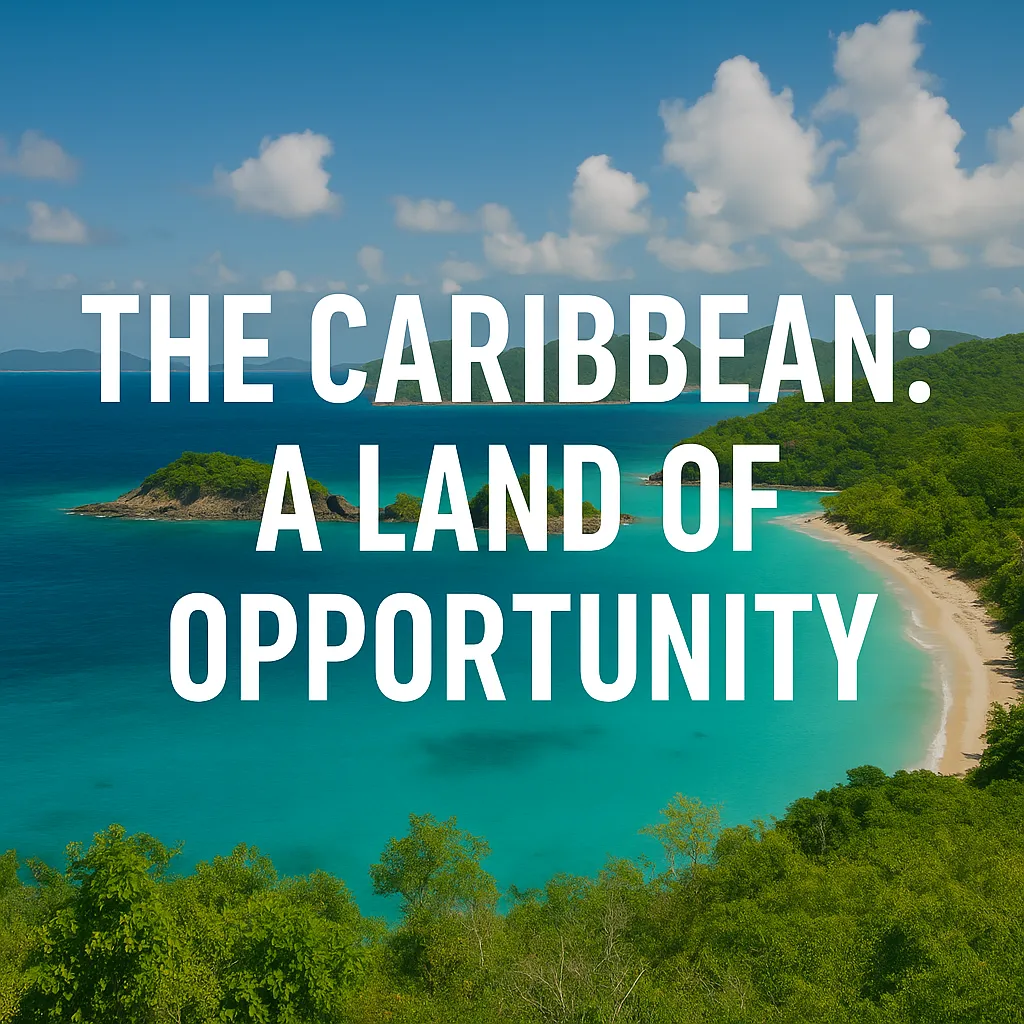
Caribbean's Next Chapter
The Caribbean has always been attractive, but for most investors it sat in a narrow lane — tourism, real estate, and offshore finance. That’s changing fast. The region is opening its economy to new forms of investment, from renewable energy and logistics to technology and manufacturing.
This shift isn’t speculative. It’s structural.
1. The Macro Picture: Predictable, Not Passive
While global markets wrestle with inflation and supply shocks, most Caribbean economies have held steady.
Regional GDP growth is projected between 3–4% in 2025.
Inflation has cooled across major markets like Jamaica, Barbados, and the Cayman Islands.
Currency and legal frameworks remain some of the most stable in the developing world.
For investors, that means less volatility — and consistent returns in markets that value governance and compliance.
2. Core Sectors Drawing Capital
A. Renewable Energy & Infrastructure
Energy imports drain regional budgets. That pressure is driving one of the strongest clean-energy transitions anywhere in the developing world.
Barbados and Jamaica have national solar mandates.
The Cayman Islands and Bahamas are investing in waste-to-energy.
Private equity and multilateral funds are co-financing microgrid and storage projects.
Returns here often run on long-term power purchase agreements (PPAs) tied to hard currency — steady, predictable cash flow.
B. Real Estate & Mixed-Use Development
The region’s property market is mature, but now more diverse. Institutional investors are backing:
Boutique residential projects targeting long-stay professionals and digital nomads.
Commercial spaces built for offshore firms and regional headquarters.
Sustainable builds using solar, rainwater, and smart-home infrastructure.
Yield compression is real, but so is stability. Cayman, Turks and Caicos, and Barbados continue to deliver 6–8% rental returns with long-term capital appreciation.
C. Financial & Digital Services
With banking regulations tightening globally, the Caribbean’s reputation for transparency has improved.
Regulatory frameworks now align closely with FATF and OECD standards.
Local fintech startups are bridging gaps in remittance, SME lending, and cross-border settlement.
Governments are introducing digital ID and e-governance to streamline business formation.
Private investors are finding opportunities in payment infrastructure, AML/KYC software, and compliance-as-a-service platforms that can export regionally.
D. Logistics & Agri-Value Chains
Port expansion in Kingston, Freeport, and Bridgetown is reshaping trade. The region’s location — midway between North and South America — makes it ideal for cold-chain logistics, regional warehousing, and nearshoring light manufacturing.
Global shipping realignment post-pandemic has shifted routes toward Caribbean hubs.
Food security initiatives are driving investments in cold storage, processing, and distribution tech.
Margins aren’t explosive, but the supply-demand gap is huge — and rising.
3. Capital Flow Trends
Private capital: Family offices and small PE funds are moving first, often alongside government incentives.
Diaspora investors: Remittance channels are quietly evolving into micro-investment platforms and real estate syndicates.
Development finance institutions (DFIs): Increasing co-lending for renewable, infrastructure, and MSME projects.
Investors are favoring joint ventures over pure greenfield projects — partnerships that de-risk through local expertise and regulatory familiarity.
4. The Advantage: Rule of Law Meets Local Agility
The Caribbean’s strongest advantage isn’t tax structure anymore — it’s predictability. English common law, property rights, and stable governance make the region safer for long-horizon investment than many “emerging” alternatives.
At the same time, local businesses are nimble. Decision-making cycles are short, and bureaucracy — while still there — is shrinking through digital governance initiatives.
The result: a region that behaves like a developed market in its institutions, and like an emerging one in its growth curve.
5. Looking Forward
The next wave of investment will go to companies and projects that modernize infrastructure and scale regional cooperation:
Renewable grids that power multiple islands
Port and shipping digitization
Local fintech enabling cross-border business
Modern real estate designed for residents, not tourists
The Caribbean is small in scale but strong in systems — and that combination is hard to find anywhere else right now.
#CaribbeanInvestment #EmergingMarkets #RenewableEnergy #RealEstateInvestment #Fintech #Infrastructure #RegionalGrowth #PrivateEquity #TradeAndDevelopment #GlobalMarkets #SustainableFinance

