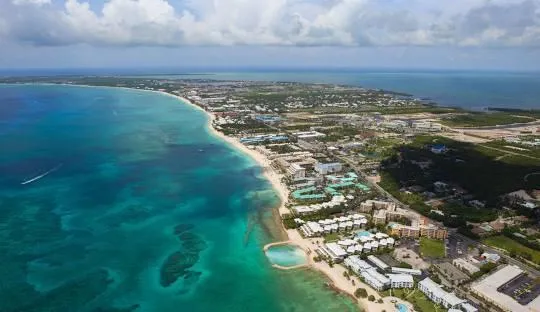
Cayman Islands Real Estate Investing - What to Know
Cayman Islands Real Estate: Structure, Stability, and Sustainable Growth
The Cayman Islands has long been the Caribbean’s quiet benchmark for disciplined growth — a jurisdiction where regulation, reliability, and opportunity meet. Behind the postcard image lies one of the most stable and transparent real-estate markets in the world.
In 2025 and beyond, Cayman’s story isn’t about luxury for its own sake. It’s about structure — the systems that make wealth preservation and measured growth possible, even in a volatile global economy.
1. The Foundation of Confidence
Legal Certainty
Cayman operates under English common law, ensuring transparency and legal predictability. Titles are clear, land records are centralized, and property rights are protected. Foreign investors can purchase freehold property outright, with no restrictions on ownership or repatriation of funds.
Stable Currency and Fiscal Discipline
The Cayman Islands Dollar (KYD) is pegged to the U.S. Dollar at a fixed rate of 1 KYD = 1.20 USD — a rare anchor in today’s global currency landscape.
There are no direct taxes on income, property, or capital gains. That simplicity, combined with steady fiscal management and strong credit ratings, makes Cayman one of the most financially predictable real-estate markets in the world.
Political and Economic Strength
The government maintains balanced budgets, transparent regulation, and open foreign investment policy. Those fundamentals give developers and investors confidence that long-term assets here are truly long-term.
2. Market Overview — 2025 and Beyond
Measured Growth, Not Speculation
Cayman’s property market has appreciated 6–8% annually over the past five years — steady, sustainable, and backed by fundamentals rather than hype.
Residential demand continues to grow among professionals, retirees, and remote workers.
Commercial property benefits from ongoing corporate relocation and financial-sector expansion.
Tourism-based assets remain strong, with occupancy rates returning to pre-2020 levels and nightly rental yields climbing.
The takeaway: Cayman doesn’t boom and bust — it compounds quietly.
3. The Core Drivers of Demand
A. Global Residency and Remote Work Programs
Initiatives like the Global Citizen Concierge Program let professionals live and work remotely in Cayman for up to two years. That single policy change transformed rental demand across mid- and upper-tier segments.
B. Financial Services Expansion
Cayman hosts over 13,000 registered funds, making it one of the top financial domiciles worldwide. The spillover effect is real: constant need for high-quality housing, commercial space, and professional amenities.
C. Infrastructure Investment
Upgrades to the Owen Roberts International Airport, new bypass roads, and utility expansions have strengthened Cayman’s backbone — supporting sustainable development without compromising livability.
D. Tourism’s Repositioning
The shift from mass tourism to low-density, high-value travel creates longer stays, higher spend per visitor, and stronger returns for well-managed hospitality assets.
4. Where the Smart Money Is Going
Seven Mile Beach
The crown jewel. Limited inventory, world-class amenities, and proven liquidity. Prices are high, but so is rental demand — particularly for branded residences and resort-linked units.
West Bay and North Side
Emerging communities attracting eco-conscious development and boutique projects. Investors are leveraging lower land costs with long-term growth potential.
Prospect and Savannah
Family-friendly corridors popular among local professionals and long-term residents. Developers focusing here can capture steady rental yield and community growth.
Cayman Brac and Little Cayman
Smaller islands seeing renewed interest in eco-resorts and remote work retreats. Lower density, slower growth — but promising margins for well-planned projects.
5. Financial and Tax Landscape
Financing Availability
Local banks provide mortgage financing to both residents and international investors, typically at 6–8% interest, with loan-to-value ratios around 60–80%. Loans are usually denominated in USD, simplifying global transactions.
Tax Efficiency
Stamp duty: One-time 7.5% at purchase.
No annual property tax, capital gains, or inheritance tax.
Clean ownership structure simplifies global asset reporting.
For long-term investors, Cayman’s model is about predictable simplicity — not loopholes, but clarity.
6. Performance Benchmarks
Long-term residential rentals: 5–8% gross yield
Short-term vacation rentals: 8–10% gross yield (with proper management)
Commercial leases: 3–6% yields with stable occupancy
Capital appreciation: Averaging 6–8% annually over the last five years
Even conservative portfolios perform reliably here, thanks to the island’s strong legal and fiscal base.
7. Sustainability and Smarter Design
Cayman is moving toward a “sustainable luxury” model: modern, efficient, and environmentally conscious.
Solar-ready infrastructure and water reclamation systems.
Building codes emphasizing storm resilience and energy efficiency.
Smart-home tech standard in new builds, reducing utility load.
This isn’t marketing language — it’s policy. Developers meeting these standards are already commanding premium valuations and faster approvals.
8. Institutional and Cross-Border Investment
The market is broadening beyond individual buyers:
Private equity and family offices are acquiring multi-unit portfolios.
REITs and structured funds domiciled in Cayman are entering the local property market.
Cross-regional partnerships are forming between Caribbean, U.S., and African investors to fund sustainable developments.
This capital maturity creates more liquidity, transparency, and consistency — hallmarks of an institutional-grade market.
9. Realistic Challenges
Even the most disciplined markets have constraints:
Land scarcity on Seven Mile Beach limits new supply.
Construction cost inflation driven by import dependency.
Environmental risks require higher building standards.
Entry costs in USD can challenge investors in weaker currencies.
Each challenge is manageable — but they underscore why structured planning, local partnerships, and long-term vision are key.
10. Long-Term Outlook
The next decade will define Cayman as more than a luxury destination.
It will mature into a sustainable, globally connected investment hub where finance, governance, and design intersect.
Expect:
Measured price growth
Increased institutional participation
Expanding infrastructure
A continued focus on sustainability and livability
Cayman’s growth won’t be noisy. It will be precise, steady, and intentional.
Final Thought
Cayman isn’t chasing attention. It’s attracting alignment.
For investors, that’s what matters most — a place where value is protected by clarity, and growth is built into the system.
Structure is the new luxury.
Meta Description (SEO)
A detailed guide to Cayman Islands real estate investment: learn about market performance, financing, yields, and why stability and sustainability define this Caribbean property market.

