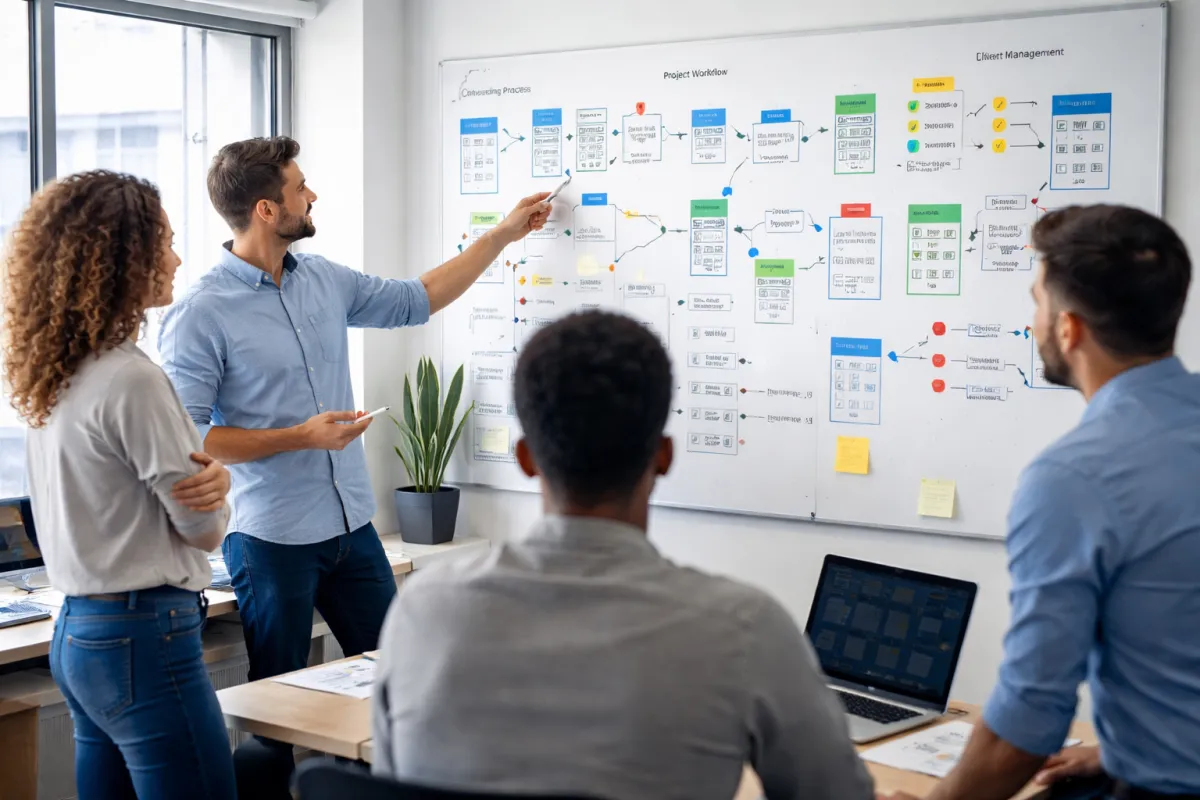
Strong Businesses Run on Systems
Strong Businesses Run on Systems — Not Individuals
A lot of businesses operate on a fragile foundation: a few key people who “know how things work.” They know the customers, the process, the systems, and the workarounds. As long as those individuals are around, the business functions. When they leave, everything slows down.
That is not a sustainable model.
A durable business is built on systems — not personalities.
Systems allow work to continue regardless of who is sitting in the chair. They make expectations clear, reduce mistakes, and allow teams to operate with confidence. More importantly, they allow a company to grow. A business cannot scale if every task depends on a specific individual remembering how to do something.
Strong systems do three important things.
First, they create consistency. When there is a defined process, customers receive the same experience every time. It doesn’t matter who answers the phone, prepares the order, or handles the account. The business operates the same way every day.
Second, systems make training possible. New employees can step into a role and quickly understand how work gets done. Instead of learning through trial and error, they follow a documented process that has already been refined.
Third, systems protect the business. When knowledge lives only in someone’s head, the company carries unnecessary risk. When knowledge lives in processes, checklists, and documented workflows, the business becomes resilient.
This is why smart operators view personnel changes differently.
Most organizations see turnover as disruption. In reality, it can be one of the best opportunities for improvement.
When someone leaves a role, it forces a business to ask useful questions. What exactly were they doing each day? Which tasks were necessary? Which ones were inefficient? What should the process look like moving forward?
Instead of simply replacing the person, the better approach is to rebuild the role.
That moment is an opportunity to simplify, automate, document, and improve the workflow before a new person steps in. Often the new structure ends up stronger than the old one.
Over time, this approach compounds.
Each role becomes clearer. Each process becomes tighter. Each new team member can contribute faster because expectations are documented and systems support them.
The result is a business that runs smoothly without constant intervention from ownership or reliance on a few key individuals.
In the early stages of a company, people carry the business. That is normal.
But long-term sustainability comes when systems carry the business — and people operate within those systems to continually improve them.
That is the difference between a business that struggles every time someone leaves and a business that keeps moving forward no matter who is on the team.

