AI, Energy & Cape Canaveral
Every great leap in computing needed new infrastructure behind it. The internet needed undersea cables. The cloud needed server warehouses. AI needs something it can't find on Earth: enough power to keep growing.
Right now, the world is building AI data centers faster than the power grid can feed them. Outside of China, electricity production has been essentially flat for years. Gas turbines — the fastest fix — are sold out globally until 2030. Permits for new power plants take years. The energy industry simply can't move at the speed AI demands.
Elon Musk, in a rare three-hour interview published in February 2026, made a striking call: within 30 months, the cheapest place to run AI won't be Nevada or Texas. It will be orbit.
The reasoning is straightforward. A solar panel in space generates five times more power than the same panel on the ground — no night, no clouds, no atmosphere eating 30% of the energy. No batteries needed. No permits. No utility negotiations. Just continuous power, at massive scale, with one input: rockets.
SpaceX is already targeting up to 10,000 launches per year using its fully reusable Starship. The entire global launch industry today does fewer than 300 annually. Musk's five-year prediction: SpaceX will put more AI computing power into orbit each year than the total amount that exists on Earth today — combined.
So Why Does Cape Canaveral Matter?
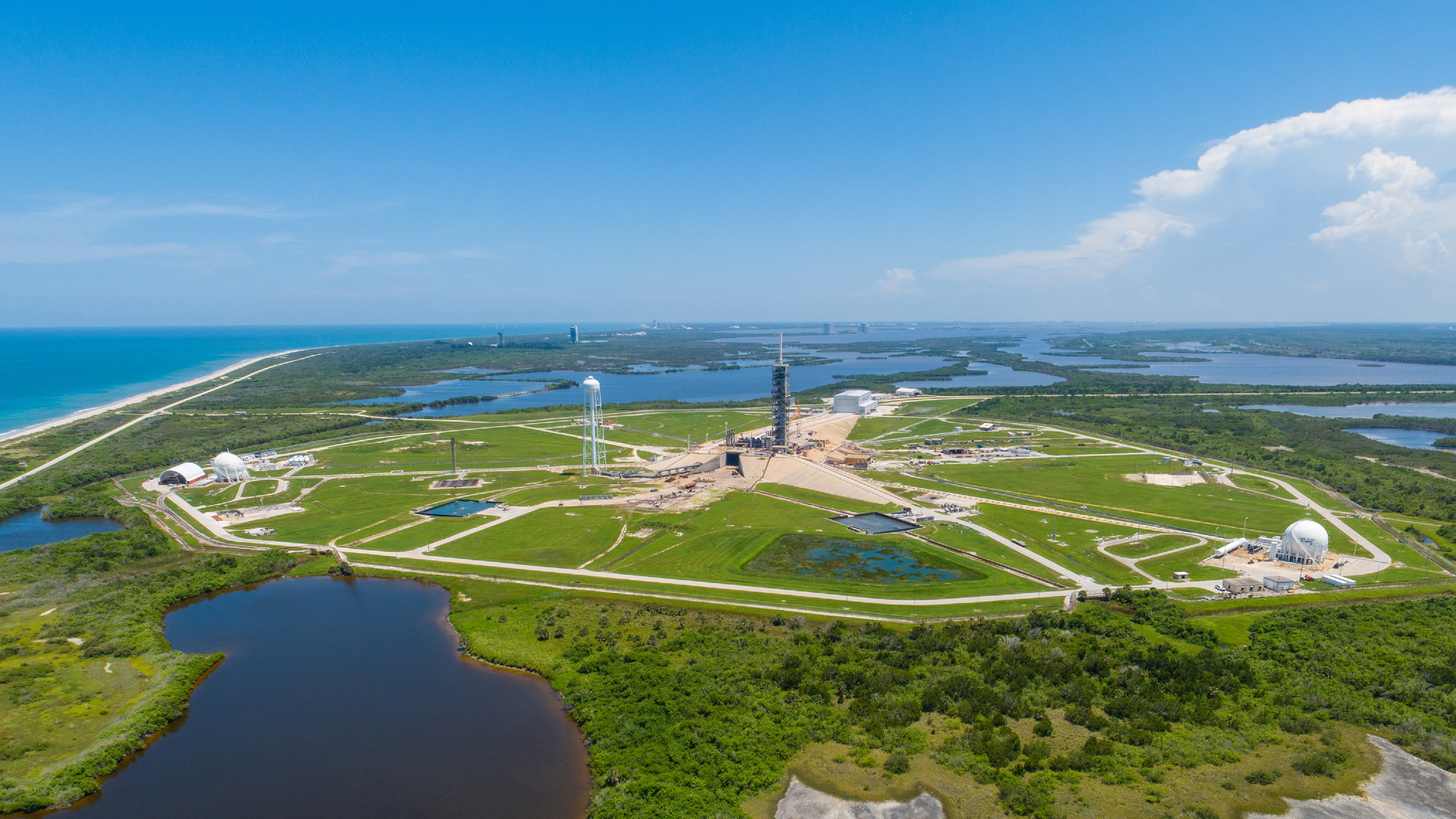
Because there's only one door into orbit at this scale, and it's on Florida's Atlantic coast.
Cape Canaveral doesn't just grow in this scenario — it transforms. It becomes what Rotterdam is to European shipping, what Singapore is to Asian trade. The world's primary gateway for the infrastructure running the global digital economy.
For investors, the plays are broader than SpaceX itself:
Real estate. The land surrounding the Cape is strategically irreplaceable. High launch cadence means industrial infrastructure — assembly, fueling, refurbishment — at a scale the region has never seen. Land currently priced like a quiet coastal county won't stay that way.
Population and jobs. Rocket operations at this volume require tens of thousands of workers at every level. Titusville, Cocoa Beach, and Melbourne would see growth not seen since the Shuttle era — housing, retail, schools, services, all of it.
Manufacturing. Musk floated building a "TeraFab" — a chip and solar manufacturing facility that would make today's semiconductor plants look modest. Florida has been actively courting exactly this kind of advanced manufacturing. The supply chain alone would reshape the state's economy.
Ground networks. Every AI system in orbit still needs to talk to Earth. Ground stations, data relay hubs, and communications infrastructure have to live somewhere. Cape Canaveral's geography — open ocean, favorable orbital angles, existing federal comms backbone — makes it the natural home.
Utilities. Even a space-based economy needs enormous ground-level power for fuel production and manufacturing. Florida's energy providers face both pressure and a significant growth opportunity as regional demand surges.
The Bottom Line
The companies building rockets are the obvious story. But infrastructure booms don't just reward the builders — they reward the land, the cities, the supply chains, and the capital that surrounds them.
Florida's Space Coast sat quietly in the shadow of its Apollo-era legacy for fifty years. If Musk is right — even partially right — that wait is over.
The most important address in the AI economy might not be Silicon Valley. It might be Cape Canaveral, Florida. And the clock is already running.

